+604-507 6303
sinengaun96@gmail.com
+604-507 6303
sinengaun96@gmail.com
+604-507 6303
sinengaun96@gmail.com

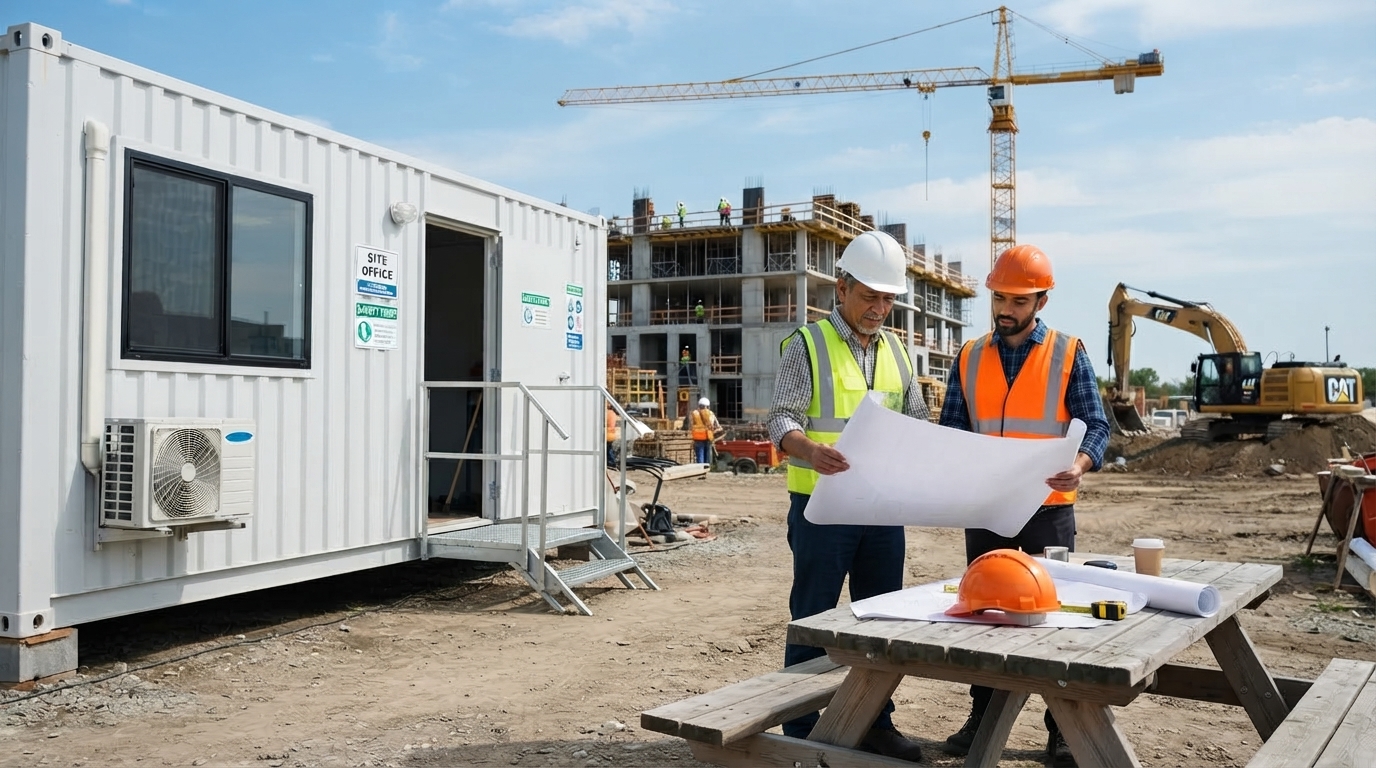
Construction projects are becoming more focused on speed, flexibility, cost control, and efficient use of limited site space. As project requirements continue to change, contractors and developers are looking for practical solutions that can be deployed quickly without creating unnecessary permanent structures.
One solution that has become increasingly common is the portable container.
Portable containers can serve many purposes on a construction site, from temporary offices and secure storage areas to worker accommodation and welfare facilities. Unlike conventional site buildings, these units can be manufactured, delivered, installed, and, where designed for it, relocated with comparatively little on-site construction work.
For construction companies considering a container in Penang, understanding why these units are widely used can help determine whether they are suitable for a particular project.
A construction container is a modular, purpose-built unit designed to provide functional space on an active construction site. It may be configured as an office, meeting room, storage facility, worker accommodation, toilet, shower room, changing room, first-aid room, workshop, or other site facility.
It is important to understand that a construction container is not necessarily the same as a standard shipping container. Some projects use converted shipping containers, while others use purpose-built modular units manufactured specifically for construction-site applications.
Purpose-built units can be designed around their intended use, including insulation, electrical systems, ventilation, plumbing, windows, doors, partitions, and interior finishes. This makes them suitable for applications where basic cargo storage alone is not enough.
Time is a major consideration in construction. Before actual building work begins, a project may require offices, storage, welfare facilities, security points, and other temporary infrastructure.
Building each facility using conventional construction methods can add labour, materials, and preparation time. Portable containers offer an alternative because much of the unit can be manufactured or fitted out before arriving at the project site.
Once the necessary foundation or support system is prepared, the container can be delivered and positioned using suitable lifting equipment. Utility connections and final installation can then be completed on site.
This can help contractors establish essential facilities without waiting for a separate conventional building to be constructed.
No two construction sites operate in exactly the same way. A small renovation project may only need a secure storage container, while a large development may require several offices, meeting rooms, worker facilities, and storage areas.
Portable containers can be configured for different requirements. Common applications include:
Using modular units also makes it possible to add facilities as a project grows, subject to site conditions, engineering requirements, and local regulations.
Construction sites often have complicated layouts. Materials, machinery, vehicles, workers, and temporary facilities must share a limited amount of space.
Portable containers can help organize the site vertically and horizontally. For example, storage can be separated from office areas, while worker facilities can be positioned away from high-traffic construction zones.
Some modular systems can also be joined or stacked when specifically designed and engineered for that configuration. However, stacking should never be assumed to be safe simply because the units appear structurally similar. The supporting structure, connections, access routes, stairs, fire escape provisions, and foundations need to be properly considered.
A major advantage of portable construction facilities is their potential for reuse.
A conventional temporary building may be demolished when a project finishes. A suitable portable unit, on the other hand, can potentially be dismantled, transported, and installed at another location if it has been designed for relocation.
This can be particularly useful for contractors managing several projects over time. Instead of purchasing or constructing new temporary facilities for every site, reusable units can form part of a company’s project infrastructure strategy.
However, relocation is not automatic. Plumbing, electrical connections, foundations, internal equipment, joined modules, and other installations can affect how easily a container can be moved.
Construction sites contain valuable equipment, tools, electrical items, spare parts, and materials. Leaving these items exposed to weather or unauthorized access can increase the risk of damage, loss, and operational delays.
A storage container provides a dedicated enclosed space that can be positioned close to the work area while remaining separate from active construction activities.
For contractors looking for a container in Penang, storage applications can be particularly practical when project sites have limited permanent storage facilities. The exact security features should be selected according to the value and type of materials being stored.
Penang has a diverse construction environment, ranging from urban developments and commercial projects to industrial and infrastructure work. Construction sites may also face challenges related to restricted access, changing project layouts, and limited available land.
Local suppliers already offer portable cabins and containers for applications such as offices, worker quarters, storage, guard houses, and sanitary facilities. For example, a Penang-based supplier lists office containers, worker-quarter containers, storage units, portable toilets, and custom-made cabins among its offerings.
This demonstrates that portable construction facilities are not simply a theoretical concept; they are available as practical site solutions in the local market.
More information may refer : Why More Businesses Are Turning to Portable Containers in Penang
The right solution depends on the project’s requirements. A simple comparison can help explain why contractors consider portable units.
| Factor | Portable Container | Conventional Temporary Building |
| Installation | Generally quick once the site is prepared | Usually requires more on-site construction |
| Relocation | Possible with suitable designs | Often difficult |
| Reuse | Potentially reusable | May require reconstruction |
| Customisation | Can include offices, storage, welfare and accommodation | Can be highly customised |
| Site disruption | Generally reduced | Potentially greater |
| Expansion | Additional units can be added | Usually requires further construction |
| Initial suitability | Best for temporary or modular requirements | Better where a conventional structure is required |
The comparison does not mean portable containers are always cheaper or better. Transportation, foundations, unloading, installation, utilities, customization, and regulatory requirements all contribute to the total project cost.
Important factors include:
Choosing a container based only on its size or purchase price can create problems later. Contractors should consider the intended use before ordering.
Portable containers are not a universal replacement for conventional buildings. Their value comes from providing a flexible solution when construction projects need functional facilities without committing to extensive permanent construction.
For contractors, developers, and project managers, the biggest advantages are often speed, flexibility, reusability, organization, and practical site management.
Whether the requirement is a simple storage unit or a complete temporary site compound, portable containers can be adapted to support different stages of a construction project.
For businesses searching for a container in Penang, the key is to look beyond the appearance and basic dimensions of the unit. Consider its intended function, construction quality, insulation, safety features, installation requirements, transportation, and compliance with the project’s specific needs.
Ultimately, the best portable container is not necessarily the cheapest unit available. It is the one that provides the right combination of functionality, durability, safety, mobility, and long-term value for the project.
Not sure which type of container best fits your construction needs? From secure storage to site offices and worker facilities, the right setup can make your project more organized and efficient. Explore your container in Penang options and discover a practical solution for your site.
Portable containers are commonly used for site offices, secure storage, worker accommodation, guard houses, workshops, toilets, and meeting rooms. Their flexible design allows contractors to choose a setup based on the project’s needs.
Portable containers can be installed faster than many conventional temporary structures and can provide immediate functional space. They are also flexible, reusable, and can potentially be relocated when a project changes or ends.
Yes, containers can often be customized with windows, doors, partitions, insulation, electrical systems, air-conditioning, plumbing, toilets, and other features. Customization should be planned according to the container’s intended use.
A portable container is a pre-built or modular unit that can be delivered, installed quickly, and potentially relocated or reused at another site. A conventional temporary building is typically constructed on-site, making it more time-consuming to install but potentially more suitable for larger or highly customized spaces.
Yes, portable containers can be relocated and reused for different projects. Their condition and suitability should be checked before each new use.
We hope you found this article informative. Our content is intended for general informational purposes only and does not constitute advice or necessarily reflect the full range of services offered by Sin Eng Aun Mobile Crane Sdn Bhd.
Readers are advised to consult with a qualified industry professional and contact our experts for crane recommendations specific to their individual project needs. While we strive for accuracy and completeness in our blog posts, we cannot guarantee they are error-free. Sin Eng Aun Mobile Crane Sdn Bhd assumes no responsibility for any errors or omissions.