+604-507 6303
sinengaun96@gmail.com
+604-507 6303
sinengaun96@gmail.com
+604-507 6303
sinengaun96@gmail.com

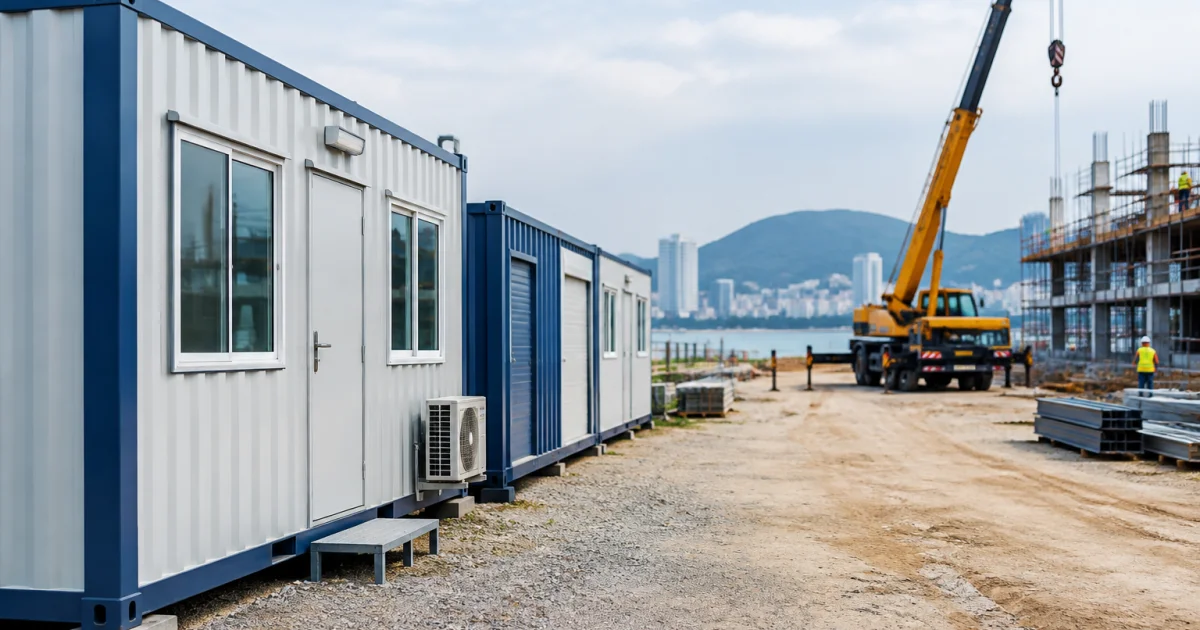
On most active projects in Penang, “on-site space” is not a nice-to-have. You need somewhere to run daily coordination, store tools and materials, manage documents, brief subcontractors, and keep basic welfare facilities available. The real decision is whether to build that space as a permanent structure—or rent it as a set of portable units that can be installed quickly and removed just as easily.
In my view, the reason so many teams choose Container Penang rentals comes down to one practical reality: project sites change faster than buildings do. Schedules shift, access routes move, scope expands or contracts, and the “ideal” layout you planned in week one is rarely the same layout you need in month three. Portable container solutions match that tempo.
This article is an opinionated, experience-driven comparison to help property developers, construction site managers, and operations teams evaluate the trade-offs. Where I state facts, they’re general industry principles; where I share a preference, I’ll label it clearly.
Fact: A permanent on-site building typically involves design decisions, approvals (internal and external), groundworks, utilities planning, contractors, and handover. Even a simple single-storey structure can take meaningful time—time you may not have when mobilization is already happening.
Opinion: Speed is the biggest reason container rentals win. With portable offices, storage containers, toilet cabins, and guard houses, you can often move from “we need space” to “space is usable” with far fewer dependencies. When you’re trying to start piling, earthworks, or early structural works, that matters.
Fast setup also reduces operational improvisation. Instead of teams working out of vehicles, sharing unsuitable rooms, or storing materials in exposed areas, you get an organized base early. That tends to improve site discipline: clearer document control, better housekeeping, and more consistent safety briefings.
One more practical point: container setups are easier to phase. You can begin with a small office and storage unit, then add more office modules or a dedicated toilet cabin as headcount increases—without redesigning or re-approving a permanent facility.
Fact: “Cheaper” depends on duration, fit-out level, utilities, and your internal cost assumptions. A permanent building may be cost-effective if it becomes part of a long-term facility or can be reused beyond the project. Renting a container may be cost-effective when the site is temporary, the layout will change, or the project timeline is uncertain.
Opinion: Rentals often feel more controllable because you’re paying for a defined asset over a defined period, rather than managing many line items (materials, labor, variations, repairs, and rework). For project budgeting, that predictability can be more valuable than a theoretical “lowest total cost.”
Common cost-control advantages teams cite when they choose rented containers:
It’s also worth noting the opportunity cost: money tied up in temporary construction can’t be used for core works, equipment, or schedule recovery. Even when a permanent structure is justified, many teams still start with portable units to keep early-stage cash and attention focused on the critical path.
Fact: Construction and industrial sites are dynamic environments. Material laydown areas expand and shrink, access roads reroute, safety zones change, and project teams grow or rotate.
Opinion: Flexibility is the most underappreciated value of container rentals. You’re not just renting a room—you’re renting the ability to reconfigure your site operations without major disruption.
Examples of real-world changes that are easier to absorb with portable units:
Flexibility also supports better safety management. When pedestrian routes and vehicle routes evolve, you can relocate guard houses, briefings areas, and entry controls to match the current traffic plan instead of forcing movement around a fixed building.
Fact: A container solution isn’t only about the box; it’s also about transportation, positioning, and sometimes lifting into place. If you’ve ever tried to coordinate multiple vendors on a tight site, you’ll know that the logistics can be as important as the unit itself.
Opinion: This is where businesses benefit from working with a provider that can support both container supply and the site logistics around it. On busy Penang sites, it’s common to need a lorry crane (or a lorry crane rental) to unload and place containers accurately, especially when space is tight or you need to position units along a perimeter without blocking access.
Depending on the site and the unit type, you may also be planning other equipment movements at the same time—machinery deliveries, relocation of heavy items, or staged mobilization. When container placement can be coordinated with other lifting and transport needs, you reduce downtime and minimize the “waiting game” between different contractors.
For industrial moves or large equipment, some sites also require specialized transport such as low loader transportation. While that’s not directly part of a container decision, it’s part of the broader reality: projects run smoother when lifting and transport planning is integrated, not fragmented.
If your project includes active building works, you may be coordinating concrete pours and access equipment too. In Penang, it’s common for a single site to require multiple services over time—mobile crane support for heavy lifts, a concrete pump for placement planning, forklifts for daily material handling, and skylifts for elevated access work such as façade tasks, M&E installation, or signage. The more your providers can align schedules, the less your team spends firefighting logistics.
Fact: Stakeholders judge sites quickly: clients, consultants, auditors, and even potential hires. A well-organized site office and welfare area signals control. A messy makeshift setup signals risk.
Opinion: Containers help you standardize your site environment. Instead of building a patchwork of temporary rooms, you can create a clean, consistent layout: office, meeting space, document area, secure storage, guard post, and toilets. That consistency supports a stronger compliance culture—people know where to go, where to store items, and where key notices and safety information are displayed.
There’s also a practical security angle. Storage containers can provide a more controlled environment for tools, equipment, and sensitive materials. When theft or damage is a concern, a dedicated locked container can be a straightforward improvement over open laydown areas or improvised storerooms.
Finally, containers can be part of a better neighbor strategy. A neat perimeter of portable units can create a more orderly site boundary, especially for urban or mixed-use developments where the public and adjacent businesses are close by.
To make the choice less emotional and more operational, use a simple framework. Think in terms of time horizon, change risk, site constraints, and closeout requirements.
Opinion: Even when a permanent facility is the end goal, starting with portable units can still be the smarter operational move. It buys you time to learn the site’s real workflow before you lock in a fixed layout.
Choosing between rented containers and permanent on-site buildings is less about which option is “better” and more about which option fits the way your project will evolve. In Penang, many businesses lean toward container rentals because they match the tempo of modern projects: fast mobilization, frequent changes, and the need to control downtime.
In my view, the strongest argument for container rentals is not simply cost—it’s adaptability. When you can set up offices, storage, toilets, and guard facilities quickly, then adjust the layout as the project shifts, you protect your schedule and reduce operational friction. If you also coordinate delivery and placement efficiently—often using a lorry crane—your site gains a practical advantage: it becomes ready to work, not just ready to plan.
If you’re evaluating options, focus on your timeline, expected changes, and how important quick relocation and clean closeout will be. For many teams, that’s exactly why container solutions remain the go-to choice.
Related reading: Why More Businesses Are Turning To Portable Containers In Penang and Container Penang Premium Office Toilet Storage Solutions.
Most sites rent a mix of portable office containers, storage containers, toilet cabins, and sometimes guard houses. The combination usually depends on headcount, security needs, and how often the work front will shift during the project.
Containers are typically transported by truck and positioned using lifting equipment when required. On constrained sites, teams often plan delivery timing, access routes, and placement points in advance, and may use a lorry crane to unload and set the unit accurately without disrupting site traffic.
No. Manufacturing plants, warehouses, and logistics operations also use portable containers for temporary offices, secure storage, and welfare facilities during renovations, equipment relocation, or expansion works—especially when business continuity is important.
Building permanent space can make sense when the facility will remain as part of the completed site, the layout is stable, and the project duration is long enough to justify the design and construction effort. If your needs will change frequently, rentals tend to offer better flexibility.
Yes, some providers support container solutions alongside lifting and transport services. This can help simplify coordination when your project also needs services such as mobile cranes, low loader transportation, forklifts, skylifts, or concrete pumping at different stages.
If you’re deciding between rented containers and building permanent on-site space, we can help you plan a practical setup that matches your timeline and site constraints. Sin Eng Aun Mobile Crane Sdn. Bhd. provides container solutions (portable offices, storage containers, toilet cabins, and guard houses) and can also support delivery and placement planning with lifting and transport services when needed.
Share your site location, access conditions, and the type of units you need, and we’ll recommend a configuration that’s easy to mobilize, expand, and remove at closeout.
We hope you found this article informative. Our content is intended for general informational purposes only and does not constitute advice or necessarily reflect the full range of services offered by Sin Eng Aun Mobile Crane Sdn Bhd.
Readers are advised to consult with a qualified industry professional and contact our experts for crane recommendations specific to their individual project needs. While we strive for accuracy and completeness in our blog posts, we cannot guarantee they are error-free. Sin Eng Aun Mobile Crane Sdn Bhd assumes no responsibility for any errors or omissions.